Why logging your expenses every day changes everything
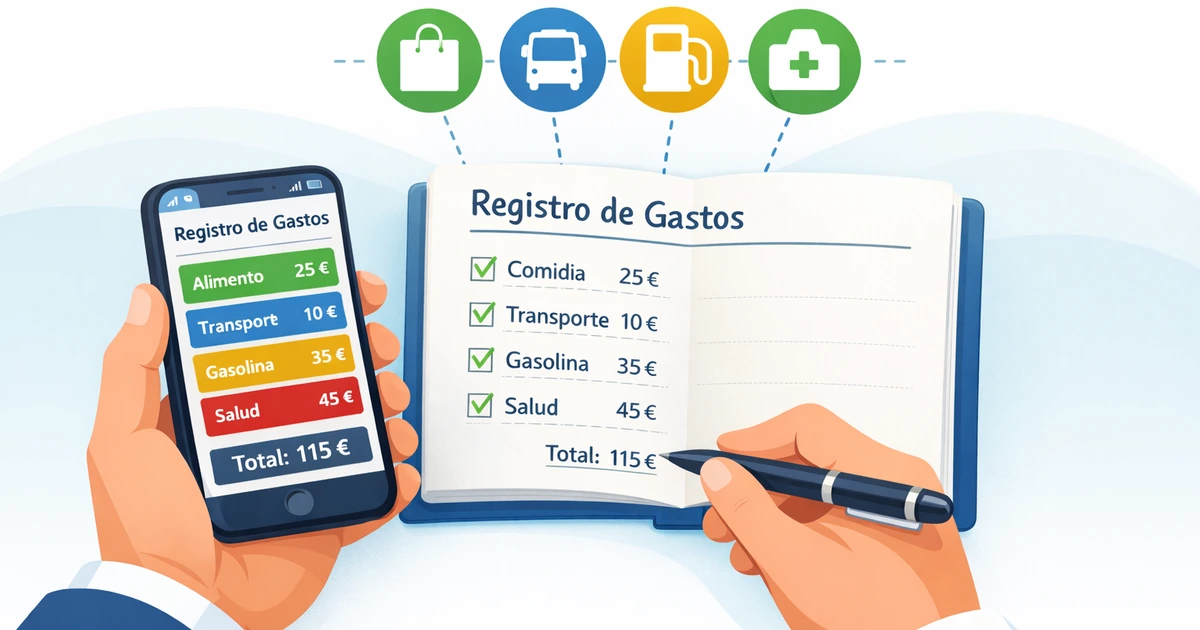
Most people know more or less what they spend on. The problem isn’t ignorance — it’s precision. “More or less” falls short at the end of the month when you can’t figure out why it didn’t reach.
Logging every expense, in the moment it happens, is the most powerful habit you can build for your money. Not because it makes you austere, but because it gives you real information to make real decisions.
The difference between knowing and seeing
You can know you spend “a lot” on food. But seeing that you spent $680 on restaurants in one month — when you thought it was $300 — is something else. That gap between what you imagine and what actually happens is where money escapes.
Daily logging closes that gap. It doesn’t tell you what to do with your money, but it does show you exactly what you’re doing with it.
Why traditional logging fails
The problem with finance apps, spreadsheets, or notebooks isn’t the format — it’s the friction. When logging an expense takes more than 10 seconds, you don’t do it. And if you don’t do it in the moment, you forget.
The ideal flow is: you spent → you log → done. No apps to open, no category to find, no remembering how much it was.
The trick: minimum friction, maximum consistency
The tool you use matters less than the habit. But there’s a rule: the more steps in the process, the faster you abandon it.
That’s why logging through WhatsApp works so well. You’re already on WhatsApp. You send a message — “Lunch 18” — and that’s it. If you have the receipt, you send a photo. If it was a quick cash payment, you type two words.
No other app to open. No extra context. No excuse not to do it.
What to log (and what not to lose track of)
You don’t need to log every cent with a perfect category from day one. Start with this:
- Amount — how much it was
- Where — the place or context (restaurant, supermarket, Netflix, gas)
- When — the moment it happened (not at end of day)
The category can come later. What you can’t recover is the expense you forgot to write down.
What happens after 30 days
A month of logging gives you something no financial advice can give you: your real spending pattern. Not the ideal, not the one you think you have — the real one.
With that you can ask concrete questions:
- Which category am I going over budget in?
- Which recurring expenses could I drop without missing them?
- How much am I short of my savings target this month?
Without the log, these questions have no answer. With it, the answers are obvious.
The habit that makes all the others possible
Budgeting, saving, investing — all depend on knowing first where the money goes. Daily logging is the first step, and it’s the one most often abandoned because people think it requires discipline.
It doesn’t require discipline. It requires a channel where it’s easy to do. If you’re on WhatsApp all day, that channel already exists.